All Different Types of Computer Keyboard

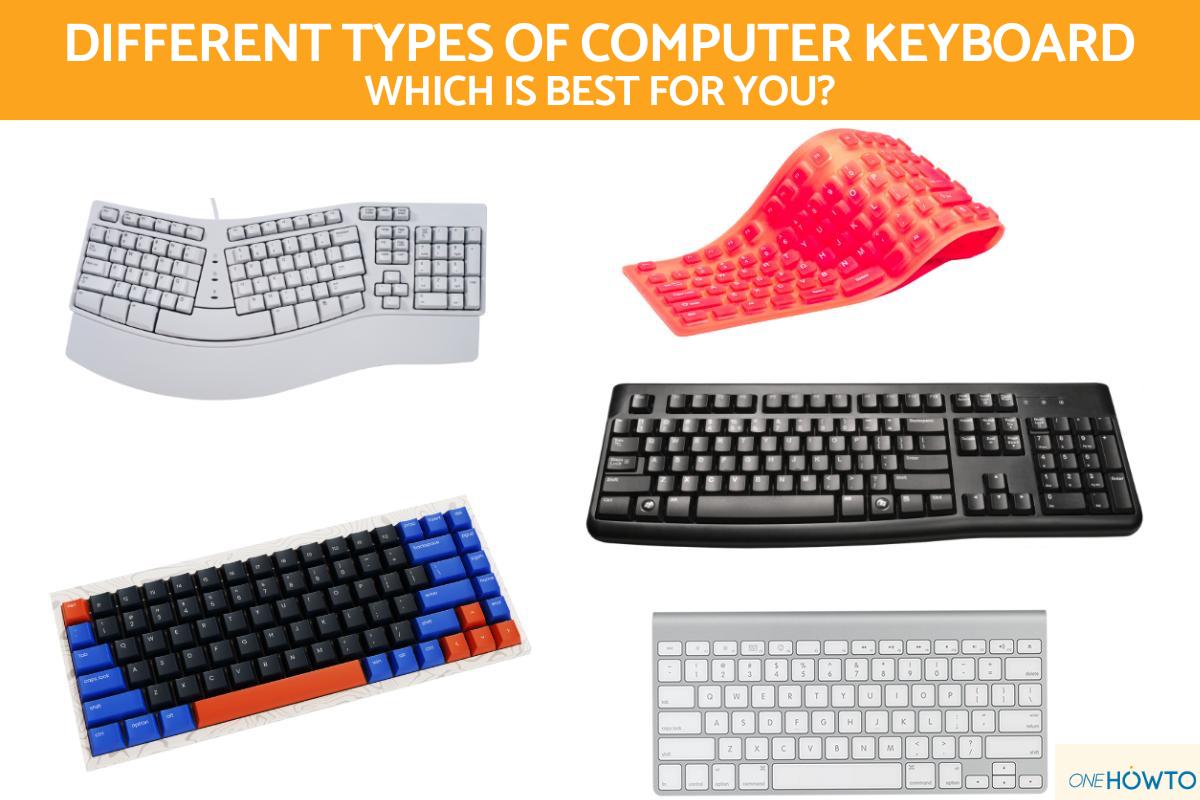
Despite the introduction of touchscreens and tablets, the use of computer mice and keyboards is still widespread. There is good reason for this. Computer keyboards present not only the letters, numbers and symbols necessary to input information into computers, they provide shortcuts which allow us to navigate operating systems with ease. Desktop computers generally need these peripheral accessories for convenient input and navigation. Although laptops have a built-in keyboard and mouse, many people still use external versions for ease of use. At oneHOWTO, we provide all different types of computer keyboard. We explain their positive and negative features to help you decide which is best for you.
Different types of computer keyboards based on design
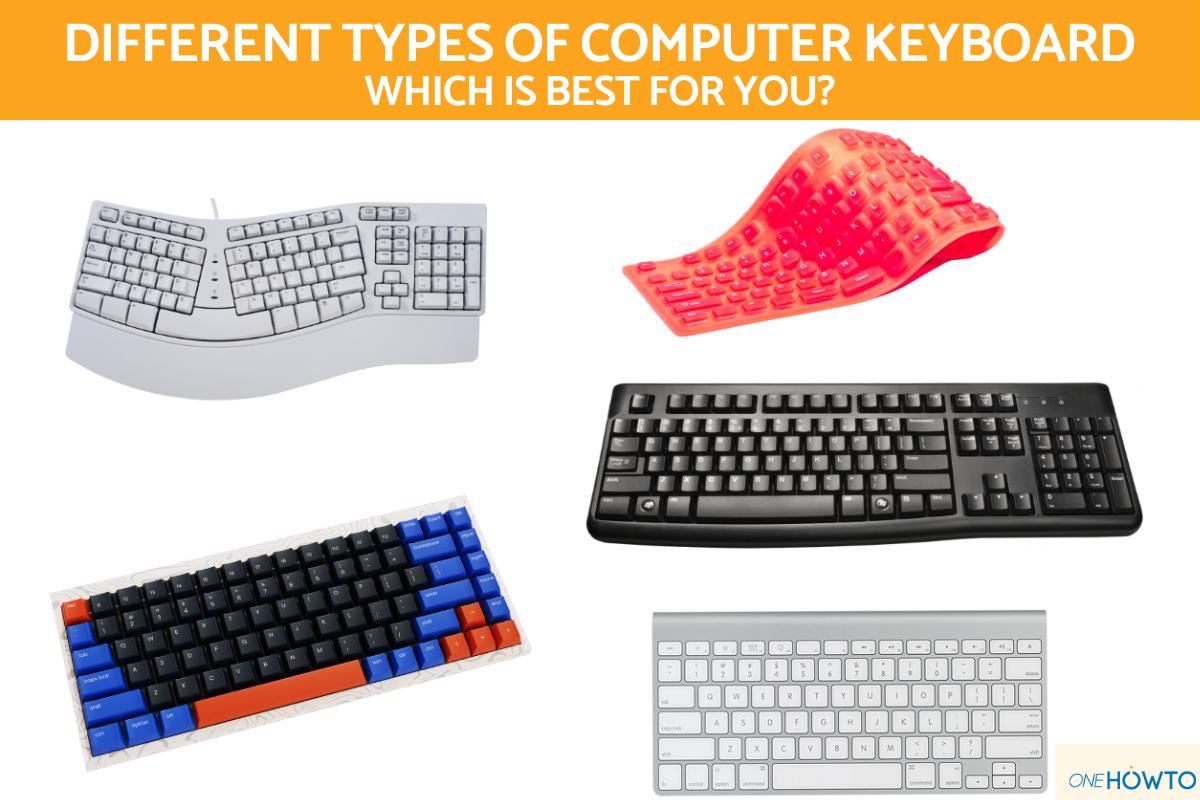
While they may have some of the same basic functions, different computer keyboards have different designs. These designs provide certain features which appeal to some users more than others. The different types of computer keyboard designs are:
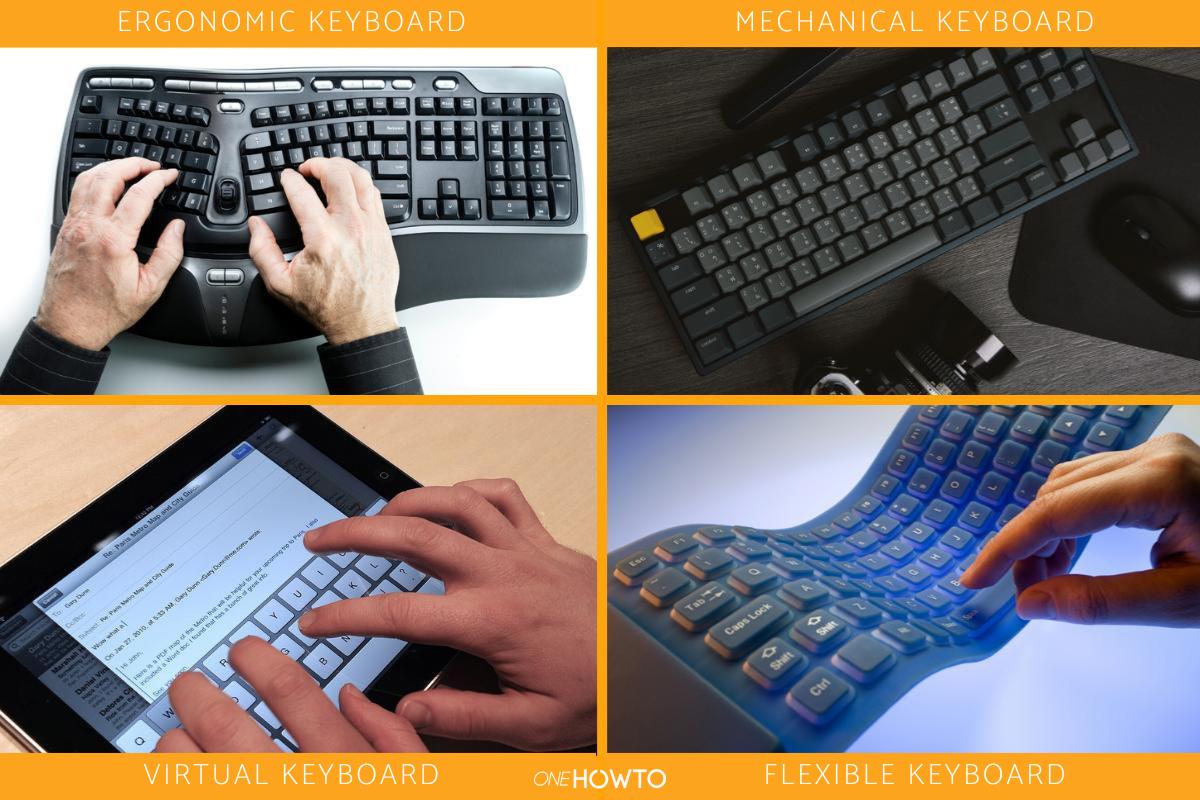
- Mechanical keyboards: these keyboards use individual keys attached to switches, usually incorporating metal springs. When you press them, they register the keystroke on the screen. There are several types of switches including linear, clicky and tactile. The feel and sound of each switch type differ, so your preferred option depends on how you like a keyboard to respond.
- Membrane keyboards: these are made with several layers of flexible materials, with the keys all being connected together via these materials. There is a conductive path between the different layers that allows the action linked to the pressing of each key to be executed. They are often quieter than mechanical models, which can make them a practical choice for shared workspaces.
- Ergonomic keyboard: this type of keyboard has a strange-looking design, but it is actually designed in such a way that the position of the wrists on the keys can be as natural as possible. Its main objective is to reduce fatigue caused by muscle tension and help limit strain during long typing sessions. Split or curved layouts may take some time to get used to, so comfort can depend on the individual user.
- Media center keyboard: this is one of the most unusual types of keyboards at first glance. Beyond the keys, these keyboards incorporate a touchpad and directional buttons. They serve as an all-in-one, with the vast majority being wireless, although wired options are available. The main advantage of the media center keyboard is that you don't need a mouse and you can use it without leaning on a table.
- Multimedia keyboard: this is the one that has specific keys designed to allow easier editing of media such as audio and video. For example, it incorporates keys to change the volume, scrub a timeline and even provide shortcuts to programs. This type of keyboard will have these specific keys incorporated into its design, as well as the regular keys required for other operations.
- Virtual keyboards: these are the keyboards you use on devices such as a smartphone or tablet. They are displayed on a screen and you interact with them using a finger, a joystick or a mouse. If you have a personal computer with a touchscreen, virtual keyboard programs can be used.
- Flexible keyboard: these are made from materials such as soft plastic or silicone. They are malleable and can usually be folded over on themselves. Since they are made from such malleable materials, you can work with them on any surface. They are also resistant to liquids. Their soft construction makes them easy to pack, although they may feel less firm to type on than a rigid keyboard.
- Capacitive keyboards: commonly known as touch keyboards, they are the middle ground between a virtual and a physical keyboard. You will find them everywhere, such as on ceramic hobs and other household appliances. They are usually quite simple to use, very durable and easy to clean.
- Projection keyboards: they vary in size and work by using a laser that projects a keyboard onto a flat surface, detecting your finger movements to register keystrokes.
- Metal contact keyboards: they combine features of membrane and mechanical keyboards. They stand out for having a circuit that closes with the interaction between two metal plates. Their advantage is more experiential than practical, with the sensation of typing they provide being very attractive for some people.

Types of computer keyboards according to their shape
In addition to specific design, there are computer keyboards available which differ according to their shape and size. A smaller keyboard saves desk space, while a full-size model keeps more keys immediately accessible.
- 100% keyboard: these have between 104 and 108 keys. They include function, navigation, control and numeric buttons. These are the largest peripherals.
- TKL (TenKeyLess) keyboard: unlike a 100% keyboard, it does not include the side numeric keypad.
- 75% keyboard: it looks a lot like the TKL, but it doesn't have the function row with the F1 to F12 keys.
- 60% keyboard: this is one of the most popular compact alternatives. They contain 68 keys and all functions are integrated into the alphanumeric panel. Many models use key combinations to access functions that are not shown as dedicated keys.
- 40% Keyboard: this is the smallest model. You can find it in an ortholinear format.

Types of computer keyboards according to the connection port
There are three types of keyboards depending on the connection port:
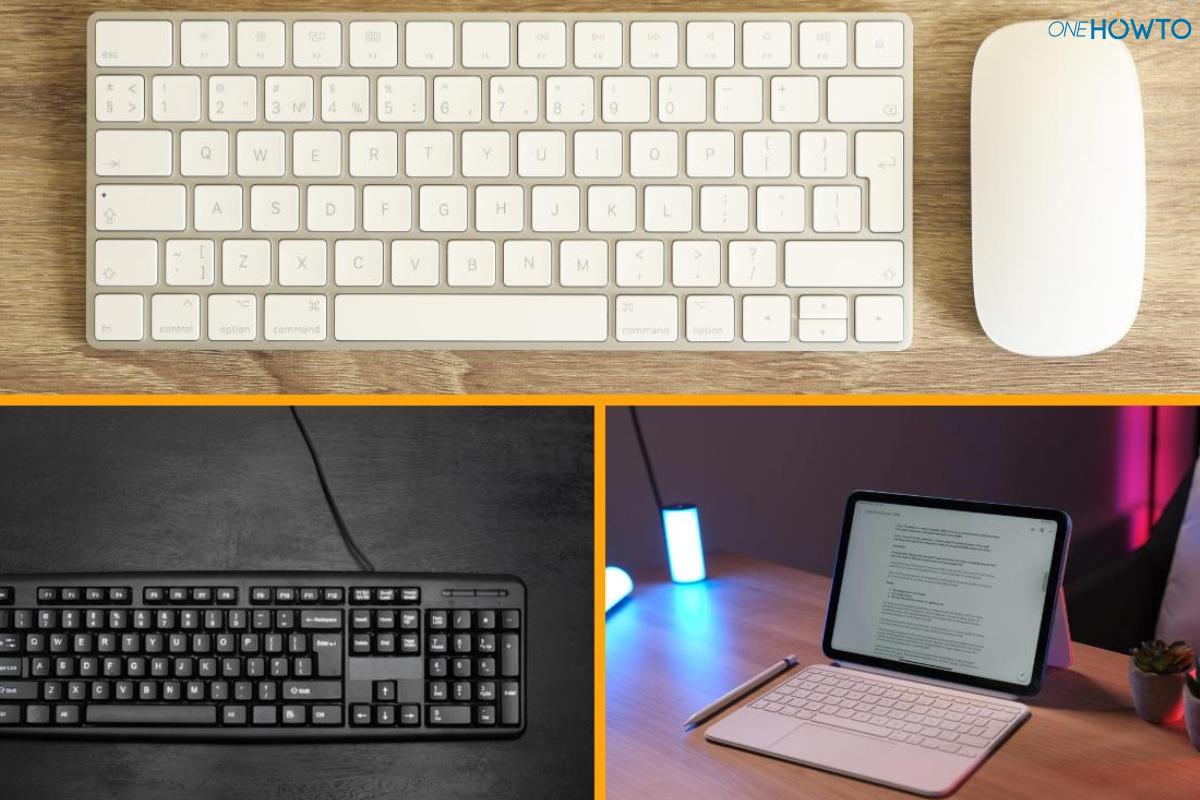
- Wireless keyboards: these connect to the device using a technology that does not require cables, such as Bluetooth. They do require external batteries or a rechargeable internal battery to power them. Battery life and charging needs can be worth considering if you plan to use one often.
- Wired keyboards: typically, the USB connector is used. In the past, the most common port was PS/2. This keyboard does not require additional electrical support.
- Keyboards with magnetic or pin connectors: these have become popular with the proliferation of professional tablet models. They connect via discrete pins located on the back and bottom of the device. They are usually powered by the tablet's battery.

Types of computer keyboards based on the layout of the keys
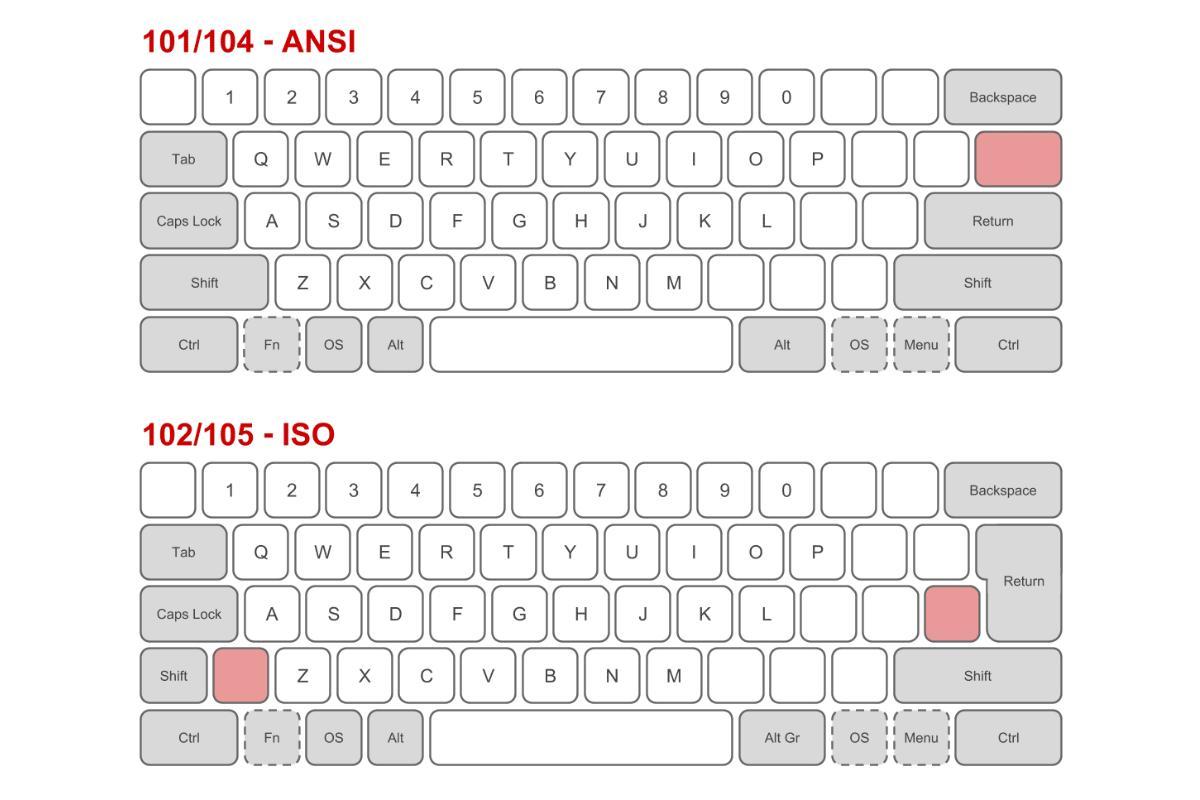
These keyboard layouts vary by region. The location and shape of keys can affect how easily you type, especially if you regularly use characters from a particular language:
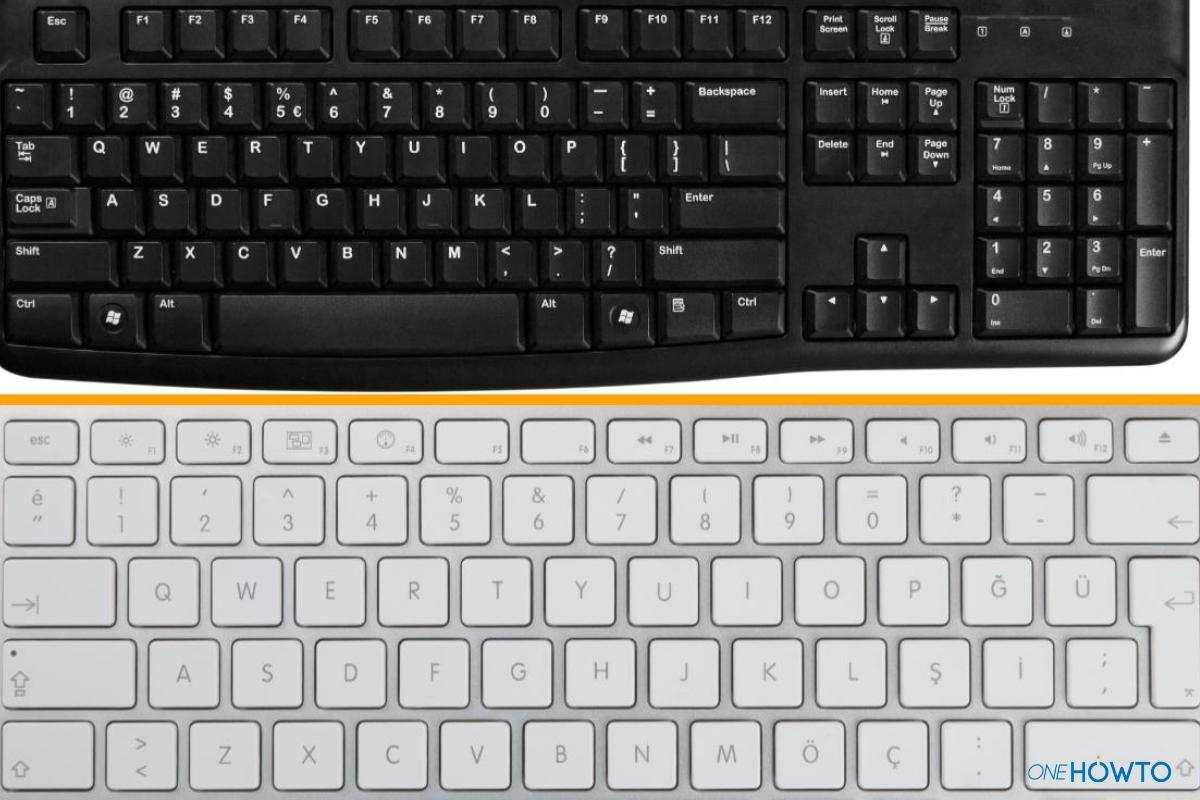
- United States: uses the ANSI key combination, which places symbols in a specific position. It usually does not include special characters for non-English languages (e.g. the Ñ in Spanish). The Enter key is smaller and the left Shift key is larger.
- Europe: the ISO layout is often used. It differs from ANSI in the position of certain symbols. This layout takes into account special characters from some languages such as French (ç), Portuguese, Spanish (ñ) or Catalan.
In addition, you can also find different locations for alphanumeric keys. The most common keyboard is the QWERTY keyboard, but you can also find variants such as QWERTZ or AZERTY on the market. When choosing a layout, check that the printed key labels match the characters you need to type.

How to choose the most suitable computer keyboard
After discovering the different types of computer keyboard, oneHOWTO shares the following tips so you can choose the most suitable one for your needs:
- Gaming keyboards: if gaming is your priority, opt for a mechanical keyboard. It will be a durable peripheral that offers a tactile response ideal for enjoying your favorite games. Before choosing one, consider the switch type and whether its layout includes the keys you use most.
- Programming keyboards: if you are a computer programmer, also choose a mechanical keyboard, as they are less prone to ghosting. Since ghosting and rollover depend on the keyboard's design, check that the model supports registering the key combinations you commonly use.
- Office or administrative work: you can choose any type of standard keyboard, although membrane keyboards are more recommended as they are silent and suitable for all work environments.
- Writing: mechanical keyboards are also the most optimal due to their great durability and because they offer a fast and stable response. You can also use ergonomic keyboards to reduce wrist strain if you are writing a lot. Whichever type you choose, adjusting your posture and taking breaks can help you stay comfortable during long sessions.
Now that you know all the different types of computer keyboards and which is best for you, you may want to check out our guides on how to type faster on a keyboard and how to clean a sticky keyboard without removing the keys.
If you want to read similar articles to All Different Types of Computer Keyboard, we recommend you visit our Computers category.
- eTools: Computer Workstations — Keyboards (Occupational Safety and Health Administration)
- Device Class Definition for Human Interface Devices (HID) Version 1.11 (USB Implementers Forum)